
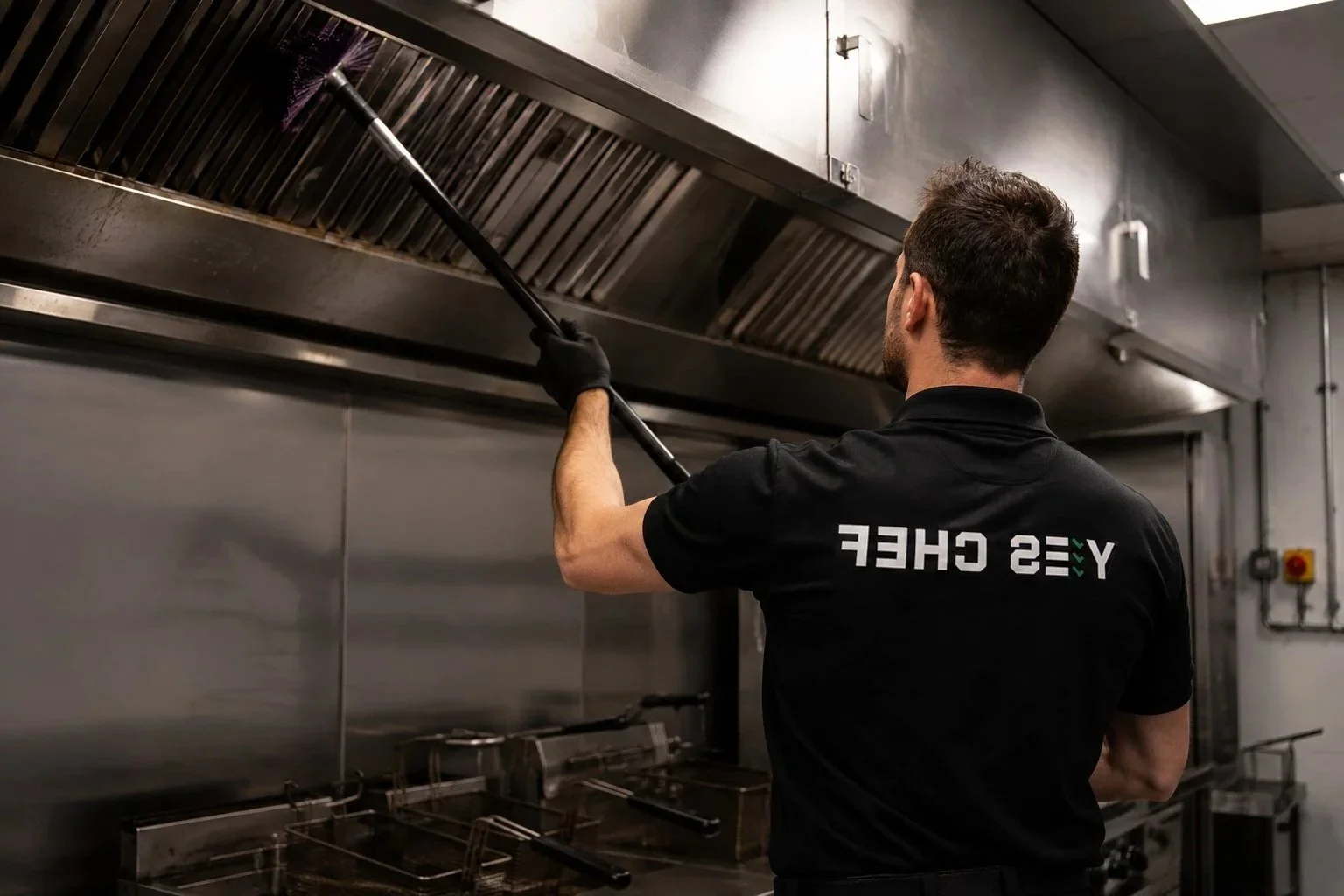
How it works
Four steps, one point of contact, nothing hidden along the way.
-

Book your free inspection & workplan
No cost, no obligation, scheduled at your site on your time. We'll inspect and measure your system, then give you a written workplan so you understand what needs doing and why.
-

We measure and document
We test your extract system using Wet Film Thickness Testing (WFTT) or Deposit Thickness Testing (DTT) — the methods set out in the BESA TR19 Grease standard. That means a number against a published threshold, not someone's opinion of "looks clean enough." Every finding is photographed and tied to the specific duct run and site, not a generic report template.
-

Get the plan
You get a written workplan - exactly what needs doing, what doesn't, and why. Use it yourself, give it to your existing contractor, or ask us to do the work. No pressure either way.
-

Get it certified
Come back to us for a paid post-clean inspection and TR19 certificate — the part that actually protects you if anyone ever asks for proof. The certificate references the real measurements taken on your system and is signed by a TR19-certified technician, not generated from a walkthrough.
DEFINITION — 01
What is TR19?
TR19 is the BESA (Building Engineering Services Association) standard for grease exhaust cleanliness in commercial kitchen extract systems. It sets out how extract systems should be inspected, cleaned and certified, and it's the standard most UK insurers and enforcement bodies reference when judging whether a kitchen extract system is compliant.
DEFINITION — 02
What are WFTT and DTT?
Wet Film Thickness Testing (WFTT) and Deposit Thickness Testing (DTT) are the two measurement methods used to assess grease deposit thickness inside extract ductwork under TR19. Both produce a measurable result against a stated threshold, rather than a visual judgement of whether a surface "looks clean.
Still have a question?
Book a free inspection & workplan and ask us directly